Lima Travel Guide 2026
South America’s food capital, oceanfront cliffs, and the launch point for Machu Picchu.
Search flightsWhy Lima
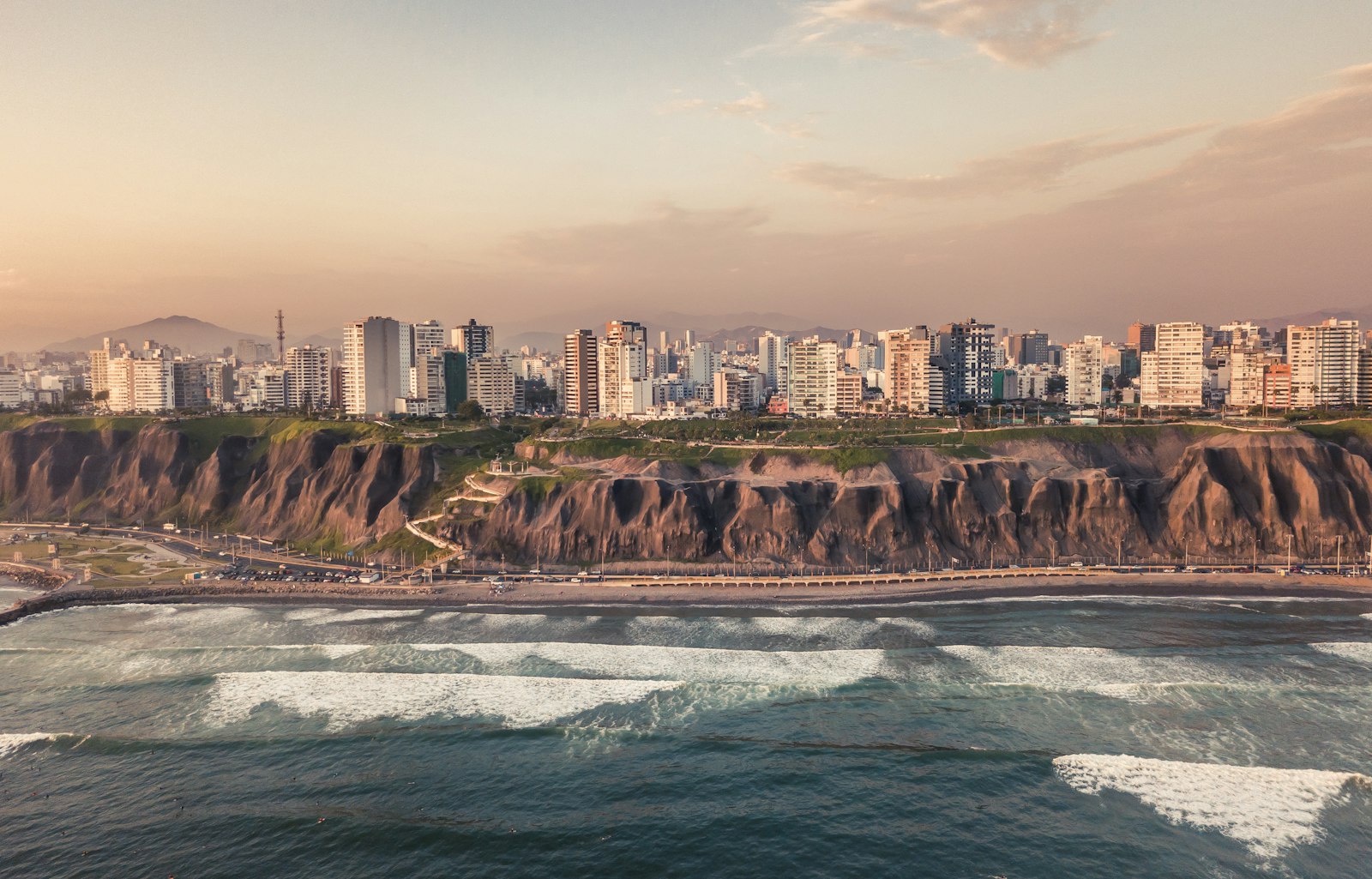
Lima has quietly become one of the world’s most respected food cities — several restaurants here regularly rank among the world’s best, and even street-level ceviche is genuinely excellent. Add the cliffside Miraflores district overlooking the Pacific and colonial architecture downtown, and it’s far more than just a Machu Picchu stopover.
What to know before you go
Most Western passport holders enter Peru visa-free for up to 183 days. Lima sits at sea level (unlike Cusco, which is high-altitude), making it a comfortable place to start or end an Peru itinerary without altitude adjustment concerns.
Best time to visit
December-April offers warmer, sunnier weather, while May-November brings Lima’s distinctive coastal fog (garua) — overcast but rarely rainy, and still a fine time to visit for the food scene.
Getting there
Jorge Chavez International Airport is South America’s major western hub, well connected from North America and increasingly from Europe.
Getting around
Ride-hailing apps are the easiest way to get around; Miraflores and Barranco are both very walkable individually, with a scenic coastal path connecting them.
Where to stay
Miraflores for safety, walkability, and ocean views; Barranco for a more bohemian, artsy atmosphere with strong nightlife.
eSIM & connectivity
Coverage is reliable throughout Lima’s main districts.
Travel insurance for Lima
Standard coverage works well; if continuing on to Machu Picchu or high-altitude Cusco, confirm your policy covers altitude-related medical needs.
Everything else for your trip
Flights
Compare fares across airlines. Find the cheapest day, route, and fare class for your trip.
Search flightsHotels
One search across every major booking site. Same room, different prices — pick the lowest.
Compare hotelsCar Rental
Compare rental companies at your destination before you land. No counter surprises.
Find a rentalTaxis & Transfers
Pre-book an airport transfer. Fixed price, driver waiting, no haggling on arrival.
Book a transferTravel Insurance
Compare policies and coverage before you need one. Medical, cancellation, adventure.
Compare policieseSIM
Get mobile data the moment you land. No SIM counter, no roaming charges.
Get an eSIMWhat to Pack for Lima
The non-obvious stuff people forget, plus what genuinely helps.
Don’t forget
- A light layer for Lima’s cool, often overcast coastal climate (garua)
- Comfortable walking shoes for Miraflores and Barranco
- Universal power adapter (Type A/B/C sockets)
- A light rain-resistant jacket for the drizzly season
Nice to have
- Cash (Sol) for smaller restaurants and markets
- Stomach medication as a precaution
- A day bag that zips securely for busier areas
- Sunscreen — UV can be strong even under cloud cover
Not Sure When to Go?
What a Day in Lima Actually Costs
Real per-day cost ranges based on our destination research, broken down by travel style. Your total will vary, but this gives you a realistic starting budget.
| Per day | Budget | Mid-range | Comfort |
|---|---|---|---|
| Accommodation | $15 | $40 | $105 |
| Food | $10 | $22 | $45 |
| Local transport | $4 | $10 | $22 |
| Activities | $6 | $16 | $40 |
| Total / day | $35 | $88 | $212 |
Practical Info: Culture, Currency & Electricity
Top Attractions
- Historic Center of Lima (UNESCO)
- Miraflores’ clifftop Malecon
- Barranco’s bohemian street art
- Larco Museum
- Day trip base for Machu Picchu (via Cusco)
Culture & Etiquette
Peruvians are generally warm but somewhat formal on first meeting — a handshake is the default until a relationship is established. Bargaining is expected in markets but not in restaurants or fixed-price shops. Altitude affects much of the country outside Lima (which is at sea level) — coca tea is the traditional local remedy for altitude adjustment elsewhere in Peru.
Currency & Exchanging Money
Currency: Peruvian Sol (PEN)
US Dollars are widely accepted informally in Peru alongside Soles, but you’ll get better value spending in Soles directly. ‘Casas de cambio’ (exchange houses) in Lima’s Miraflores district generally offer fair rates and are safer than street changers, who operate in a legal gray area and are a common target for counterfeit bills. Bank ATMs are the simplest safe option.
Been here? Rate your currency-exchange experience below to help other travelers.
Electricity & Adapters
Voltage: 220V, 50Hz
Plug type: A and C (US flat 2-pin and European round 2-pin — both are commonly found)
If your home plug type doesn’t match, bring a universal travel adapter — it’s the one item worth packing regardless of destination.