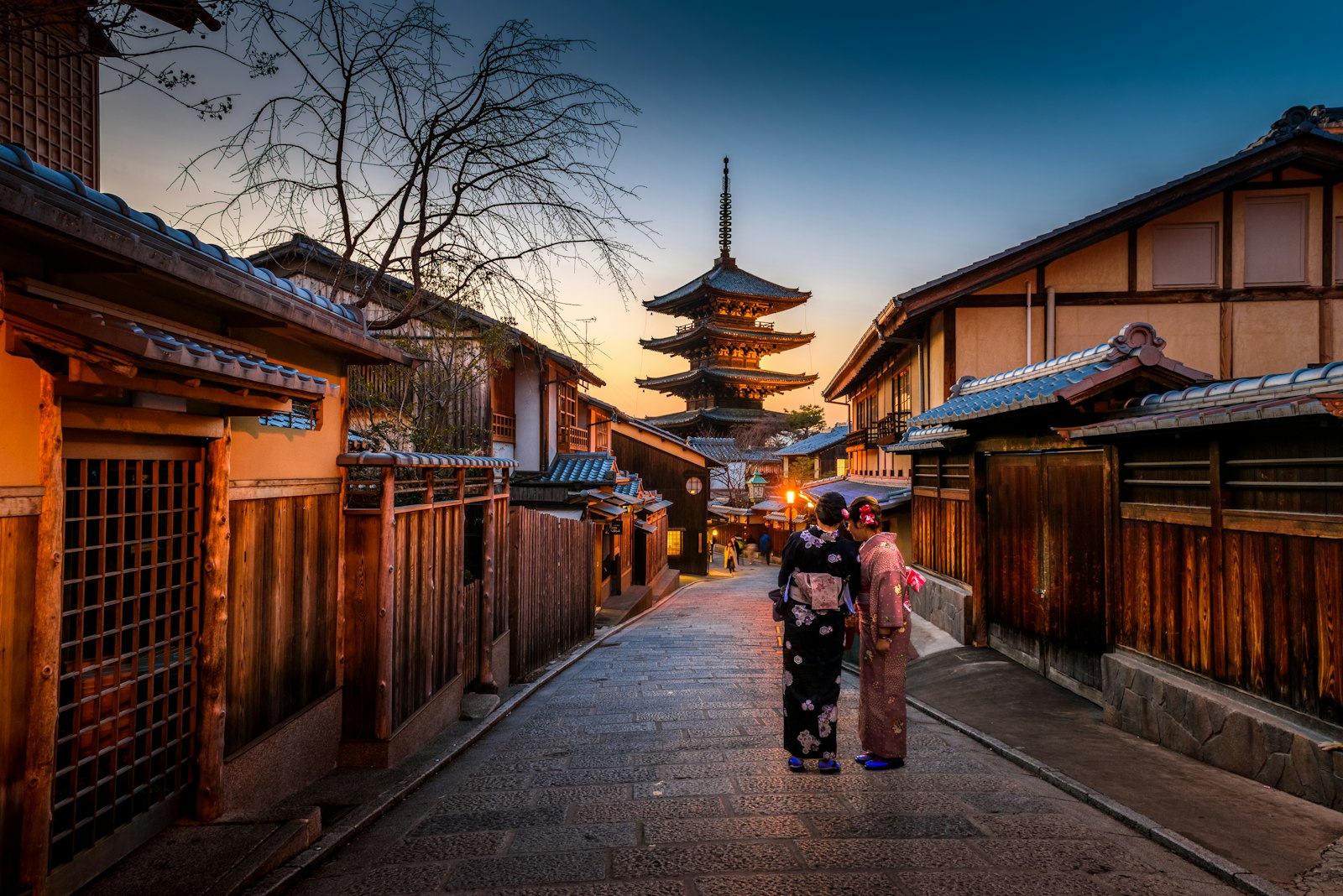
Japan Travel Guide 2026
Tokyo, Kyoto, and beyond — why the weak yen makes Japan the best-value destination in Asia right now, and how to do it on $65–100 a day.
Search flightsWhy Japan in 2026
The weak yen has handed international travelers roughly a 25–30% discount on everything from ramen to ryokans compared to just a few years ago. Japan — a destination that used to be prohibitively expensive for budget travelers — is now genuinely affordable. A solo traveler can comfortably spend $65–100/day including accommodation, food, and local transport.
Add to that: one of the safest countries on Earth, a rail network so precise it apologizes for being 20 seconds late, food that justifies the entire trip on its own, and a culture that’s endlessly fascinating whether you’re exploring 1,200-year-old temples or 24-hour neon-lit arcades. Japan rewards the solo independent traveler more than almost any other destination.
What to know before you go
The JR Pass isn’t automatically worth it anymore
Prices went up significantly in late 2023. Unless you’re crossing the entire country in one week (Tokyo → Kyoto → Hiroshima → back), you’ll likely save money with individual Shinkansen tickets or regional passes like the Kansai Thru Pass.
What a Day in Japan Actually Costs
Real per-day cost ranges based on our destination research, broken down by travel style. Your total will vary, but this gives you a realistic starting budget.
| Per day | Budget | Mid-range | Comfort |
|---|---|---|---|
| Accommodation | $30 | $75 | $200 |
| Food | $20 | $40 | $90 |
| Local transport | $8 | $15 | $30 |
| Activities | $10 | $25 | $60 |
| Total / day | $68 | $155 | $380 |
Cash is still used more than you’d expect
Japan is increasingly cashless, but many smaller restaurants, temples, and rural businesses are cash-only. Get yen from a 7-Eleven ATM (they accept foreign cards) when you arrive.
A 1-week trip is too short for Japan
You’ll feel rushed. 10–14 days lets you do Tokyo + a day trip (Kamakura or Nikko) + Kyoto/Osaka + one wildcard (Hiroshima, Nara, or a mountain town like Takayama) at a comfortable pace.
Capsule hotels are not a gimmick
Modern capsule hotels like Nine Hours are clean, quiet, well-designed, and cost around $30/night. Perfect for solo travelers who just need a clean place to sleep.
Best value months: January, June, September, early December
Cherry blossom season (late March–April) and autumn leaves (November) are stunning but peak-priced and very crowded. The months just outside those windows offer better value and still-excellent weather.
Realistic daily budget
Budget ($65–100/day): Capsule hotel or hostel ($25–40), convenience store breakfast ($3), one sit-down meal ($8–15), one street food meal ($5–8), metro/local train ($5–10), one paid attraction ($5–12).
Mid-range ($130–200/day): Business hotel or mid-range ryokan ($60–100), two restaurant meals ($25–40), Shinkansen segment if traveling between cities ($40–80), attractions and experiences ($15–25).
Money-saving hack: Visit supermarkets (Life, Aeon, Summit) after 7 PM. Nearly every store marks down sushi, bento boxes, and prepared foods by 30–50% approaching closing time. The quality is excellent — this is Japan, not airport leftovers.
Getting there
Tokyo has two airports: Narita (NRT) is the main international hub, 60–90 minutes from central Tokyo by train. Haneda (HND) is closer but has fewer international routes. Osaka’s Kansai (KIX) is the gateway if you’re starting in the Kansai region (Kyoto/Osaka/Nara).
Tip: Open-jaw tickets (fly into Tokyo, out of Osaka — or vice versa) often cost barely more than a round-trip and save you a $60–80 Shinkansen ride back to your starting city. Always compare this option.
Getting around
IC Cards (Suica/Pasmo): Tap-to-pay cards that work on virtually all trains, buses, and convenience stores in major cities. Buy one at any station kiosk when you arrive — it’s the single most useful thing you’ll get in Japan. Shinkansen: For intercity travel. Tokyo → Kyoto takes 2h15m. Book individual tickets online via SmartEX app to skip ticket office lines. Local trains: Google Maps is remarkably accurate for Japanese transit. Trust it.
Solo traveler tips
Japan is built for solo dining: counter seating is standard at ramen shops, sushi bars, and many restaurants. You’ll never feel awkward eating alone here — it’s the norm. Ticket machines at restaurants (you order and pay at a vending machine, then hand the ticket to the kitchen) eliminate any language barrier for ordering food. Coin lockers at every major station let you explore a city for the day without dragging luggage.
eSIM for Japan
Japan has excellent 4G/5G coverage everywhere, including rural areas and the Shinkansen. An eSIM with a Japan data plan is the easiest option — install before you fly, activate on landing. Typical plans: 3GB for 7 days ($5–8), 10GB for 14 days ($12–18). You won’t need a physical SIM.
Travel insurance for Japan
Medical care in Japan is excellent but can be expensive for foreigners without insurance. A hospital visit can easily cost $200–500+ without coverage. Standard travel insurance works fine — no special add-ons needed unless you’re skiing (check winter sports coverage). Compare travel insurance here.
Everything else for your trip
Flights
Compare fares across airlines. Find the cheapest day, route, and fare class for your trip.
Search flightsHotels
One search across every major booking site. Same room, different prices — pick the lowest.
Compare hotelsCar Rental
Compare rental companies at your destination before you land. No counter surprises.
Find a rentalTaxis & Transfers
Pre-book an airport transfer. Fixed price, driver waiting, no haggling on arrival.
Book a transferTravel Insurance
Compare policies and coverage before you need one. Medical, cancellation, adventure.
Compare policieseSIM
Get mobile data the moment you land. No SIM counter, no roaming charges.
Get an eSIMWhat to Pack for Japan
The non-obvious stuff people forget, plus what genuinely helps.
Don’t forget
- A portable IC card or the ability to add one on your phone for transit
- Comfortable shoes — expect to walk 15,000+ steps most days
- Layers — indoor heating/cooling can be intense either direction
- A universal power adapter (Japan uses Type A/B, 100V)
Nice to have
- A small towel — many public restrooms lack paper towels/dryers
- Cash — still essential despite growing card acceptance
- A JR Pass if doing multi-city travel (buy before arrival)
- Portable phone charger for long sightseeing days
Not Sure When to Go?
Check Flight Prices
Practical Info: Culture, Currency & Electricity
Top Attractions
- Senso-ji Temple and Shibuya Crossing, Tokyo
- Fushimi Inari’s torii gates, Kyoto
- Mount Fuji views from Hakone or the Fuji Five Lakes
- Osaka’s Dotonbori food scene
- Hiroshima Peace Memorial Park
Culture & Etiquette
Japan runs on quiet consideration: no talking on phones on trains, no eating while walking in most places, and tipping is not practiced and can even cause confusion or be seen as awkward. Shoes come off at the entrance of homes, ryokans, and many restaurants — look for a genkan (entryway step) as the cue. Bowing is the standard greeting; a nod-level bow is fine for casual tourist interactions.
Currency & Exchanging Money
Currency: Japanese Yen (JPY)
Japan remains a heavily cash-based society outside big cities, so carrying yen matters more than in most of Asia. 7-Eleven ATMs are the most reliable way for foreign cards to withdraw yen at a fair rate, available nationwide 24/7. Airport exchange counters and post office windows are also reliable; avoid hotel-desk exchange, which typically carries a worse rate.
Been here? Rate your currency-exchange experience below to help other travelers.
Electricity & Adapters
Voltage: 100V, 50/60Hz (unusually low — some dual-voltage US devices work fine, but always check before plugging in high-wattage items like hair dryers)
Plug type: A and B (US-style flat 2-pin, ungrounded)
If your home plug type doesn’t match, bring a universal travel adapter — it’s the one item worth packing regardless of destination.