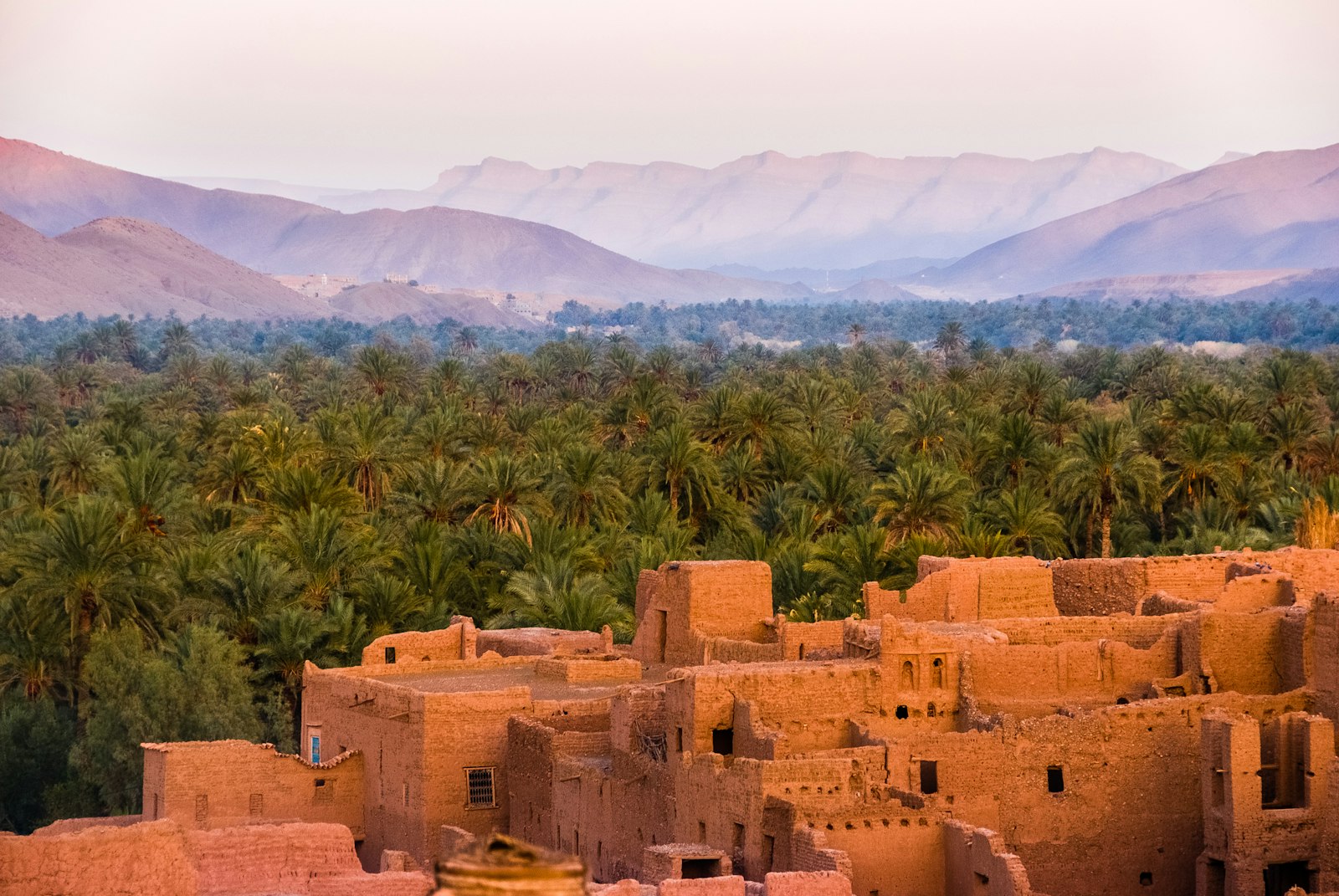
Morocco Travel Guide 2026
Marrakesh, the Atlas Mountains, and the Sahara — a different world a short flight from Europe.
Search flightsWhy Morocco in 2026
Morocco offers a genuinely different cultural experience within a short flight of Europe — medinas, mountains, desert, and coast, all at prices well below Western Europe. It rewards travelers who embrace a bit of chaos (haggling in souks, navigating medina alleys) and is one of the most accessible entry points into North Africa for first-time visitors.
What to know before you go
Marrakesh is the classic entry point, not the whole country
Most first trips center on Marrakesh’s medina, but pairing it with the Atlas Mountains, a desert trip to Merzouga, or the coastal city of Essaouira makes for a much fuller trip.
What a Day in Morocco Actually Costs
Real per-day cost ranges based on our destination research, broken down by travel style. Your total will vary, but this gives you a realistic starting budget.
| Per day | Budget | Mid-range | Comfort |
|---|---|---|---|
| Accommodation | $15 | $40 | $100 |
| Food | $8 | $18 | $40 |
| Local transport | $4 | $10 | $25 |
| Activities | $6 | $15 | $40 |
| Total / day | $33 | $83 | $205 |
Haggling is expected, not rude
In souks, initial prices are inflated 2-4x. Negotiating is a normal, expected part of the transaction — approach it as a friendly back-and-forth, not a conflict.
Riads beat hotels for the real experience
Traditional riads (courtyard guesthouses) in the medina offer more character than modern hotels, often at similar or lower prices.
Dress modestly, especially outside tourist zones
Shoulders and knees covered is a good default, particularly for women, and particularly outside Marrakesh/coastal tourist areas.
Best time to visit
March–May and September–November are ideal: warm days, cool evenings, manageable heat for exploring medinas and hiking. June–August gets brutally hot in Marrakesh and the desert (40°C+), though the coast (Essaouira) stays pleasant. Winter is mild in Marrakesh but genuinely cold at night in the Atlas Mountains and desert — pack layers if visiting Merzouga in December-January.
Getting there
Marrakesh Menara Airport (RAK) has direct flights from most major European cities, often on budget carriers with fares under $60 one-way outside peak season. Casablanca (CMN) is the larger international hub with more long-haul connections, including direct flights from North America.
Getting around
Intercity trains: ONCF trains connect Casablanca, Rabat, Marrakesh, and Fes comfortably and cheaply. CTM/Supratours buses: Reliable for routes trains don’t cover, including toward the Atlas Mountains and south. Desert tours: Multi-day trips to Merzouga (Sahara) are typically arranged as guided tours from Marrakesh or Fes rather than independent travel. Medina walking: Marrakesh and Fes medinas are pedestrian mazes — expect to get lost, and enjoy it.
Where to stay
Budget ($15–30/night): Hostels or simple riads just outside the main medina squares. Mid-range ($40–80/night): Well-reviewed traditional riads with rooftop terraces. Splurge ($120–300/night): Luxury riads with private pools, or desert camps in Merzouga with genuinely spectacular stargazing.
eSIM & connectivity
Coverage is solid in cities and along main routes, thinning in the High Atlas and deep desert. A Morocco or North Africa eSIM is the simplest option, or a local Maroc Telecom/Orange SIM is cheap and available at the airport.
Travel insurance for Morocco
Standard policies cover Morocco well. If your trip includes trekking in the Atlas Mountains (Toubkal, for instance) or a multi-day desert tour, confirm those activities are explicitly covered. Compare travel insurance here.
Go Deeper
What to Pack for Morocco
The non-obvious stuff people forget, plus what genuinely helps.
Don’t forget
- Modest, loose-fitting clothing that covers shoulders/knees
- A scarf or shawl — useful for sun, mosques, and desert wind
- Comfortable closed shoes for medina walking
- Universal power adapter (Type C/E sockets)
Nice to have
- A warm layer for cold desert nights if visiting the Sahara
- Cash (Dirham) — many medina shops and taxis are cash-only
- Hand sanitizer/wipes — useful in markets and desert camps
- Sunglasses and sun protection for desert excursions
Not Sure When to Go?
Practical Info: Culture, Currency & Electricity
Top Attractions
- Marrakech’s Jemaa el-Fnaa and medina souks
- Chefchaouen’s blue-washed old town
- Sahara Desert overnight camp from Merzouga
- Fez’s ancient medina (UNESCO)
- Essaouira’s coastal old town
Culture & Etiquette
Bargaining in the souks isn’t optional, it’s the expected way business is done — starting at 50% of the asking price is a common (if rough) rule of thumb. Modest dress is appreciated broadly, and required at mosques (most of which don’t admit non-Muslim visitors, with a few notable exceptions like Casablanca’s Hassan II Mosque). Friday is the main day of prayer.
Currency & Exchanging Money
Currency: Moroccan Dirham (MAD)
MAD is a closed currency — you cannot buy it before arriving and technically cannot take it out of the country, so exchange in-country and spend it down before leaving. Bank ATMs in Marrakech, Fez, and Casablanca are reliable and give fair rates; licensed exchange bureaus (look for an official rate board) in the medinas are also fine, but avoid anyone approaching you on the street offering to exchange money.
Been here? Rate your currency-exchange experience below to help other travelers.
Electricity & Adapters
Voltage: 220V, 50Hz
Plug type: C and E (European round 2-pin)
If your home plug type doesn’t match, bring a universal travel adapter — it’s the one item worth packing regardless of destination.
Everything else for your trip
Flights
Compare fares across airlines. Find the cheapest day, route, and fare class for your trip.
Search flightsHotels
One search across every major booking site. Same room, different prices — pick the lowest.
Compare hotelsCar Rental
Compare rental companies at your destination before you land. No counter surprises.
Find a rentalTaxis & Transfers
Pre-book an airport transfer. Fixed price, driver waiting, no haggling on arrival.
Book a transferTravel Insurance
Compare policies and coverage before you need one. Medical, cancellation, adventure.
Compare policieseSIM
Get mobile data the moment you land. No SIM counter, no roaming charges.
Get an eSIM