South Korea Travel Guide 2026
Seoul’s neon energy, ancient palaces, and some of the best food and public transport in Asia.
Search flightsWhy South Korea
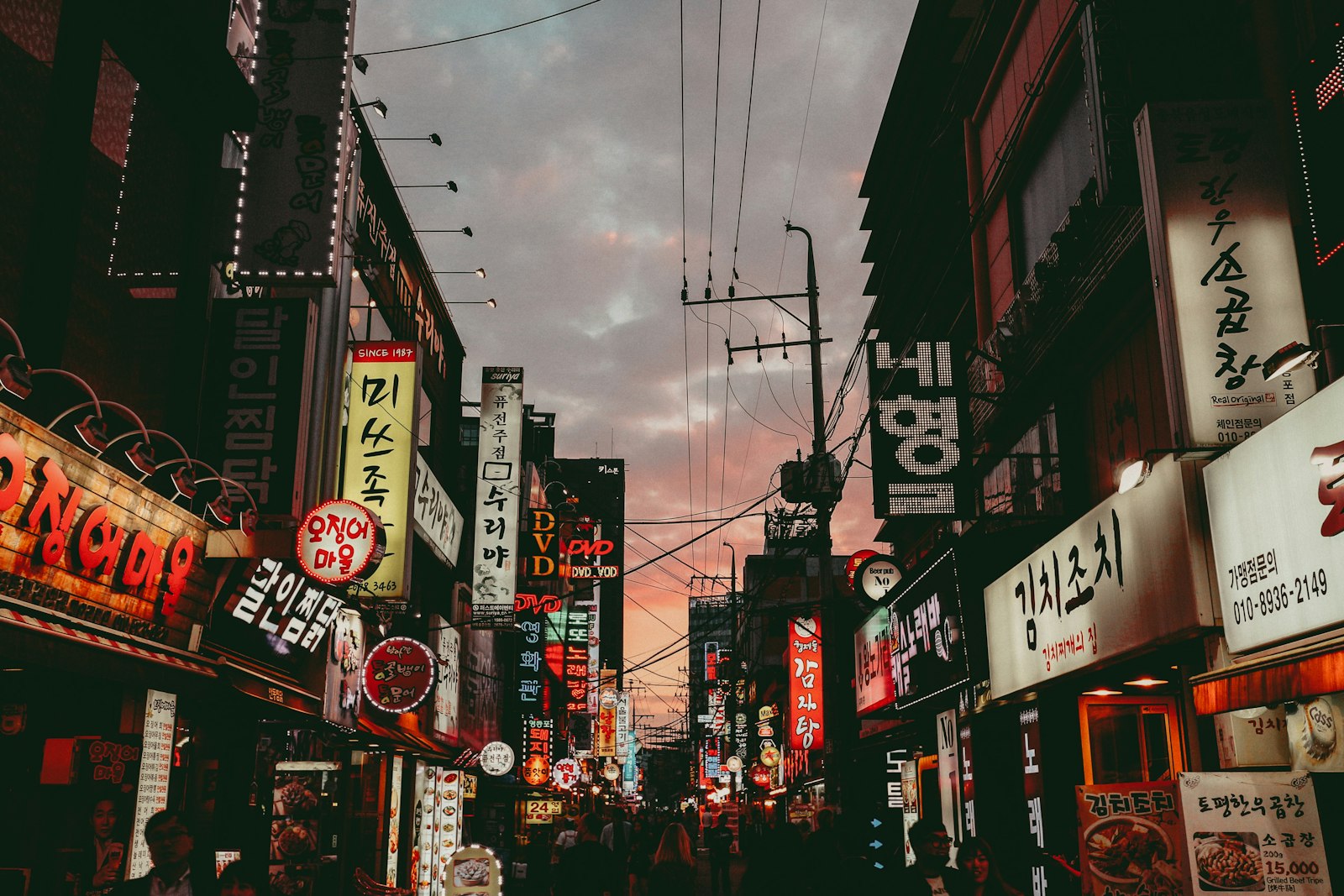
South Korea pairs a genuinely futuristic capital with deep tradition — Seoul’s palaces and hanok villages sit minutes from some of the world’s densest neon districts. The food scene alone (Korean BBQ, street food markets, temple cuisine) is worth the trip, and the public transport is some of the best and cheapest anywhere.
What to know before you go
Most Western passport holders get 90 days visa-free, but K-ETA (an online travel authorization) is required before arrival for most nationalities — apply online, it’s quick but don’t skip it.
Best time to visit
Spring (April-May) for cherry blossoms and autumn (September-November) for fall foliage are the two peak windows, both with comfortable temperatures. Summer is hot and humid with a monsoon season in July.
Getting there
Incheon International Airport near Seoul is the main gateway, well connected globally and linked to the city by fast, cheap train.
Getting around
Seoul’s subway system is one of the best in the world — clean, cheap, and covers almost everywhere you’d want to go. The KTX high-speed train makes day trips to Busan or Gyeongju easy from Seoul.
Where to stay
Myeongdong or Hongdae for first-timers wanting central, walkable neighborhoods with easy subway access; Busan is worth 2-3 days if extending beyond Seoul.
eSIM & connectivity
South Korea has some of the fastest, most reliable mobile coverage anywhere — essentially no dead zones nationwide.
Travel insurance for South Korea
Standard coverage is sufficient for most itineraries; South Korea’s healthcare system is excellent if needed, but still worth having coverage rather than paying out of pocket.
Everything else for your trip
Flights
Compare fares across airlines. Find the cheapest day, route, and fare class for your trip.
Search flightsHotels
One search across every major booking site. Same room, different prices — pick the lowest.
Compare hotelsCar Rental
Compare rental companies at your destination before you land. No counter surprises.
Find a rentalTaxis & Transfers
Pre-book an airport transfer. Fixed price, driver waiting, no haggling on arrival.
Book a transferTravel Insurance
Compare policies and coverage before you need one. Medical, cancellation, adventure.
Compare policieseSIM
Get mobile data the moment you land. No SIM counter, no roaming charges.
Get an eSIMWhat to Pack for South Korea
The non-obvious stuff people forget, plus what genuinely helps.
Don’t forget
- Comfortable shoes — expect to walk extensively across Seoul
- A T-money transit card (buyable on arrival) for the subway
- Layers — weather shifts noticeably between seasons
- Universal power adapter (Type C/F sockets)
Nice to have
- A portable phone charger — excellent connectivity means heavy usage
- Small towel — some public restrooms lack paper towels
- Cash for smaller markets and street food stalls
- A light face mask if visiting during high pollen/dust seasons
Not Sure When to Go?
What a Day in South Korea Actually Costs
Real per-day cost ranges based on our destination research, broken down by travel style. Your total will vary, but this gives you a realistic starting budget.
| Per day | Budget | Mid-range | Comfort |
|---|---|---|---|
| Accommodation | $20 | $55 | $140 |
| Food | $12 | $25 | $55 |
| Local transport | $5 | $12 | $25 |
| Activities | $8 | $20 | $50 |
| Total / day | $45 | $112 | $270 |
Practical Info: Culture, Currency & Electricity
Top Attractions
- Gyeongbokgung Palace, Seoul
- Myeongdong shopping and street food
- Bukchon Hanok Village
- N Seoul Tower
- DMZ day tour from Seoul
Culture & Etiquette
Bowing is a common greeting alongside handshakes, and using two hands to give or receive items (especially money or business cards) is considered respectful. Shoes come off when entering homes and many traditional restaurants. Age and hierarchy matter in how people address each other, though tourists aren’t expected to navigate this perfectly.
Currency & Exchanging Money
Currency: South Korean Won (KRW)
Myeongdong in Seoul has a dense cluster of licensed money changers offering rates that consistently beat banks and airport counters — comparing two or three is easy since they’re clustered together. Bank ATMs (KEB Hana, Woori) are reliable and widespread; look for ones marked ‘Global’ for guaranteed foreign card acceptance.
Been here? Rate your currency-exchange experience below to help other travelers.
Electricity & Adapters
Voltage: 220V, 60Hz
Plug type: C and F (European 2-pin round)
If your home plug type doesn’t match, bring a universal travel adapter — it’s the one item worth packing regardless of destination.